
Last updated on October 24, 2026
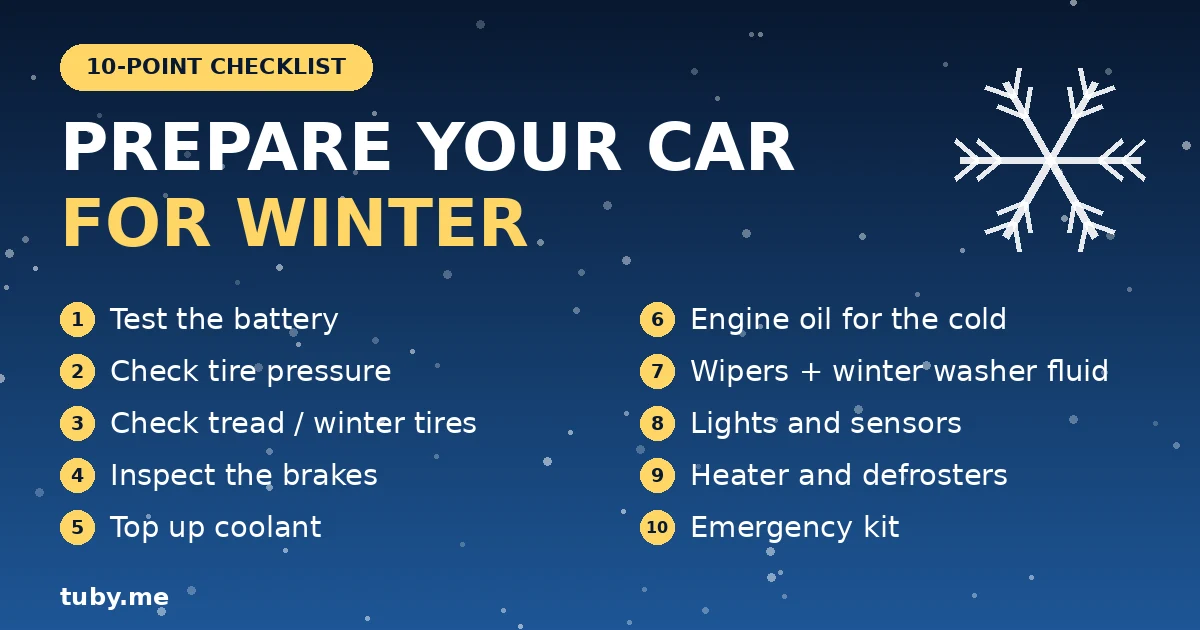
Winter is hard on cars. Cold weather drains the battery, lowers tire pressure, thickens engine oil and makes every drive less forgiving. The good news is that most winter breakdowns are easy to prevent. This 10-point checklist shows you how to prepare your car for winter step by step, what you can check yourself and when it is worth asking a mechanic. Do it in autumn, before the first frost, and you will be ready when the temperature drops.
Why you should prepare your car before winter
Cold affects almost every system in your car. According to AAA, at 0°F (-18°C) a car battery loses about 60% of its strength, while the engine needs roughly twice as much power to start. The winter driving tips from NHTSA also remind drivers that tire pressure drops with the outside temperature and that it is harder to control or stop a vehicle on slick or snow-covered roads.
Spending an hour on these checks now is much cheaper than a tow truck, a dead battery on a freezing morning or a skid on a worn tire.
Battery and engine: make sure your car starts in the cold
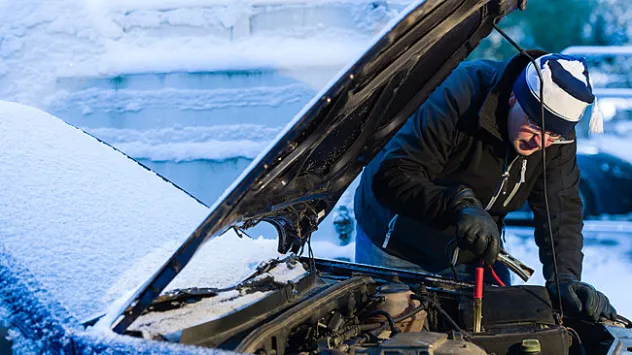
1. Test the battery. Batteries can lose up to 35% of their strength at 32°F (0°C), and the older they are, the worse it gets. AAA recommends having a battery tested before winter if it is more than three years old. Many garages and auto parts stores offer a quick test, often for free. Warning signs include slow cranking, dim headlights, corroded terminals and the battery light on the dashboard (here is what the battery warning light means).
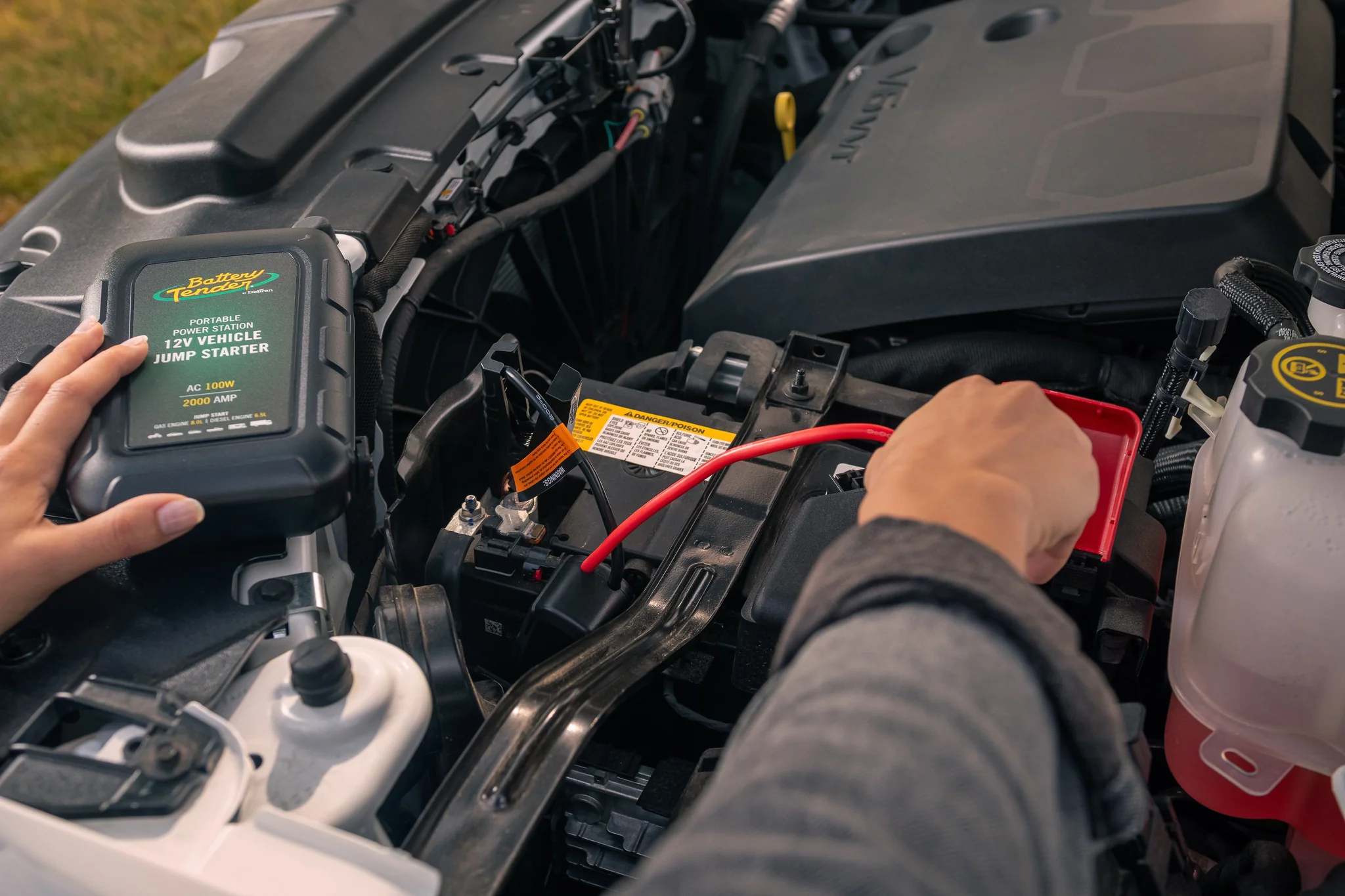
If your car does not start, you can follow our guide to jump-start a car safely. Keep in mind that a jump-start is only a temporary fix: if the battery is weak, replace it. Our list of the best car batteries can help you choose. AAA also notes that very short trips do not give the alternator enough time to recharge the battery, so try to mix in a longer drive from time to time. You can read more in this AAA guide to protecting your car battery in winter.
2. Check the engine oil. Oil gets thicker in the cold, so using the right viscosity matters. Check the level with the dipstick and use the grade recommended in your owner’s manual. If an oil change is due, do it before winter. If you want to know more, we explain the role of engine oil and how to choose it.
Tires and brakes: keep your grip on cold roads
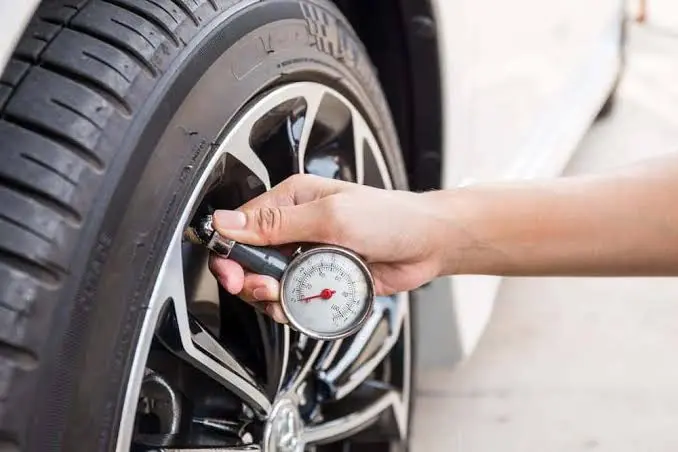
3. Check the tire pressure. As a rule of thumb, tire pressure drops about 1 psi (0.07 bar) for every 10°F (about 5.5°C) the temperature falls. Check it at least once a month and before long trips, with the tires cold. Use the pressure shown on the sticker inside the driver’s door or in the manual, not the maximum pressure printed on the tire sidewall, as NHTSA explains on its tire safety page. If you need help, follow our guide to check and set your tire pressure correctly.
4. Check the tread and think about winter tires. The legal minimum tread depth is 1.6 mm in many countries (2/32 inch in the US), but for winter driving many experts recommend replacing tires earlier, at around 4 mm. Use the wear indicators or a coin, and read our guide on how to check your tire wear, including uneven wear and tire age. If temperatures regularly stay below about 7°C (45°F), winter tires give much better grip than summer tires, so see when to swap winter tires for summer ones. Also check your local rules, because some regions require winter tires or snow chains in certain conditions.
5. Inspect the brakes. Squealing, grinding, a vibrating pedal or a soft pedal are signs that you need a check-up. Ask a mechanic to inspect the pads, discs and brake fluid, since brake fluid absorbs moisture over time. Our ranking of the best brake discs may help if a replacement is needed.
Fluids, wipers and visibility
6. Check the coolant. Look at the coolant level when the engine is cold and top it up with the type recommended by the manufacturer. Many manufacturers specify roughly a 50/50 mix of coolant and water, but check your manual. A low or weak mix can freeze in the cold or cause overheating. If the temperature gauge ever climbs, read why the water temperature in the engine increases.
7. Replace worn wipers and fill the washer fluid. Streaks, squeaks and chattering mean the blades are worn. Winter wipers resist ice better, and winter washer fluid with antifreeze will not freeze on the windshield. Do not use plain water.
8. Check the lights and sensors. Make sure the headlights, brake lights, hazard lights and turn signals work. Before driving, clean snow, ice and dirt from the windows, headlights, tail lights, cameras and sensors around the car. If a warning light comes on, our guide to dashboard warning lights can help you understand it.
9. Test the heater, defrosters and interior. Check that the front and rear defrosters work properly. Thick rubber floor mats are useful against slush and snow, but make sure they are well fixed and never interfere with the pedals. If your windows fog up or the cabin feels damp, here is how to get rid of winter humidity in your car.
10. Pack a winter emergency kit
Even a well-prepared car can get stuck. Keep these items in the trunk from late autumn until spring:
- Ice scraper, snow brush and a small shovel.
- Sand or cat litter to get traction if you are stuck.
- Jumper cables or a portable jump starter.
- A flashlight with spare batteries.
- Blankets, warm clothes and gloves.
- Water and some snacks.
- A first-aid kit and a reflective warning triangle.
- A power bank or car charger for your phone.
If you get stranded, NHTSA advises staying with your vehicle. If you run the engine to keep warm, do it only for short periods, keep the exhaust pipe clear of snow and never leave the engine running for long with the windows closed.
Winter car checklist at a glance
| # | Check | What to look for |
|---|---|---|
| 1 | Battery | Test it if it is over 3 years old; check terminals and starting power |
| 2 | Engine oil | Correct level and the viscosity recommended in the manual |
| 3 | Tire pressure | Check monthly with cold tires, using the door-jamb sticker value |
| 4 | Tread and winter tires | Enough tread depth; winter tires below about 7°C (45°F) |
| 5 | Brakes | No noise or vibration; pads, discs and fluid in good condition |
| 6 | Coolant | Right level and antifreeze protection |
| 7 | Wipers and washer fluid | Clean wipe without streaks; winter washer fluid |
| 8 | Lights and sensors | All lights working; cameras and sensors clean |
| 9 | Heater and defrosters | Front and rear defrosters working; fixed floor mats |
| 10 | Emergency kit | Scraper, shovel, cables, flashlight, blanket, charger |
Winter driving habits that protect your car
- Do not warm up for long. AAA says modern cars do not need long warm-ups. Start the engine, wait a few seconds and drive gently for the first minutes.
- Keep the fuel tank at least half full. It gives you a safety margin if you get stuck in traffic or delayed by snow.
- Wash the car regularly. Road salt and grime cause corrosion. See our winter guide on when and how to use a car wash.
- Slow down and leave more distance. NHTSA’s number one winter tip is to drive slower and increase the following distance, because stopping takes longer on slick surfaces.
Frequently asked questions
When should I prepare my car for winter?
The best time is in autumn, before the first frost. Garages get busy once the cold arrives, and a battery or tire problem is easier to solve before you depend on the car every morning.
Do I really need winter tires?
It depends on your climate and local rules. If temperatures are regularly below about 7°C (45°F), or you drive on snow and ice, winter tires give better grip and shorter braking distances than summer tires. Check what your region requires.
How long should I warm up my car in winter?
Only a few seconds. Modern engines warm up faster while driving, so start gently and avoid heavy acceleration until the engine reaches its normal temperature.
Is jump-starting enough if my battery dies?
It is only a temporary solution. If the battery died because of the cold, have it tested. A weak or old battery should be replaced before it fails again.
With these ten checks done, your car will be ready for the cold months. Save this checklist, go through it once every autumn, and if you find something you cannot fix yourself, book a visit to your mechanic before winter really starts.
My name is Maxime, and I am passionate about everything on wheels, especially when it goes hand in hand with vintage and teaching. In writing, I love sharing my driving know-how with a good dose of fun and simplicity!
Latest Posts Published
Prepare Your Car for Winter: 10-Point Checklist (2026)
How to Check and Set Your Tire Pressure Correctly
How to Jump-Start a Car Safely: Step-by-Step Guide

AI in Cars 2026: How Smart Cabins Are Tracking Your Every Move

Diesel hybrid car: I know everything
How to get rid of winter humidity?
That’s why it will explode sales
Become unbeatable with the light witnesses of your dashboard