
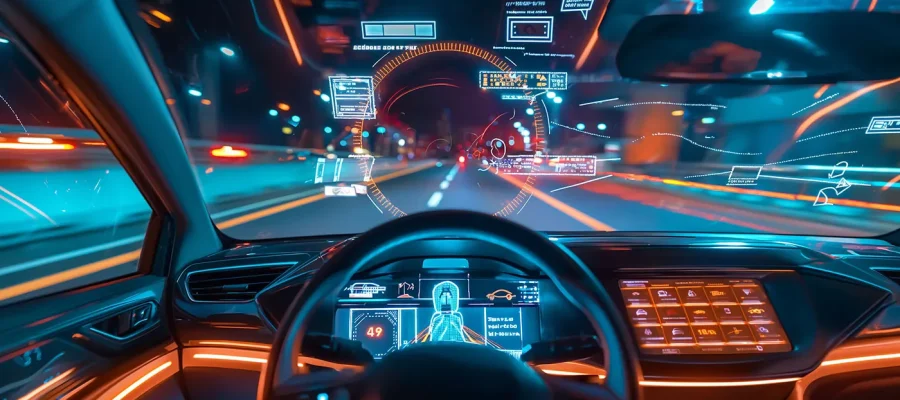
CES 2026 made one thing painfully clear: the car of the near future isn’t just electric, it’s cognitive. Beyond electrification, the January Las Vegas tech show showed how manufacturers, tech suppliers and startups are reconceiving the vehicle as a cognitive platform that adapts to the user in real time. Translation: your next car won’t just drive you around, it’ll study you while it does it.
Meet your new permanent co-pilot
AI at the show wasn’t just a driving assistant or an entertainment tool — it was framed as a permanent co-pilot adjusting safety, comfort and personalized services based on biometric and contextual data collected both inside and outside the cabin. Nvidia unveiled its own contribution to this: an AI initiative called Alpamayo, built to give vehicles real-time reasoning capabilities for complex decisions in dynamic environments.
Bosch went a step further on the cabin side. The company showed an AI extension platform for smart cabins that turns the vehicle interior into a proactive space capable of anticipating what the driver and passengers need next. LG showed something similar: an IA Cabin system that can tell when a nearby vehicle is merging and the driver hasn’t noticed yet, and intervenes.
Robotaxis are no longer a concept
This isn’t just prototype talk anymore. Hyundai Motor Group displayed the Ioniq 5 RoboTaxi, developed with Motional — a Level 4 autonomous vehicle designed to operate without a human driver. Level 4. Not «hands-off-but-stay-alert.» Actually driverless, in defined conditions.
So who’s actually watching the watcher?
Here’s the part that doesn’t make it into the manufacturer press releases: none of this works without constant biometric monitoring — eye tracking, heart rate, posture, attention level, mood inference. Every «smart» cabin feature demoed at CES runs on sensors reading you, not just the road. And for now, there’s no unified standard on where that data goes, who can access it, or how long it’s kept.
What to watch for next
| Area | What’s happening | Why it matters |
|---|---|---|
| In-cabin AI | Bosch, LG and Nvidia platforms reading biometric/behavioral data | No unified data-governance standard yet |
| Autonomy | Hyundai/Motional Ioniq 5 RoboTaxi (Level 4) | Driverless operation moving from pilot to commercial use |
| Reasoning AI | Nvidia Alpamayo real-time decision engine | Cars increasingly making complex judgment calls, not just reacting |
The points to remember:
- AI is now positioned as the central innovation axis in cars, ahead of electrification itself.
- In-cabin AI (Bosch, LG, Nvidia Alpamayo) increasingly relies on biometric and behavioral data collected inside the vehicle.
- Level 4 autonomy is moving from concept to commercial pilots (Hyundai/Motional Ioniq 5 RoboTaxi).
- Privacy and data-governance rules for in-car AI are lagging well behind the technology itself.
Latest Posts Published
AI in Cars 2026: How Smart Cabins Are Tracking Your Every Move

Los 10 trabajos mejor pagados en España que nadie menciona
Diesel hybrid car: I know everything

How to get rid of winter humidity?
That’s why it will explode sales
Become unbeatable with the light witnesses of your dashboard

Mechanics for mannequins

VPN Autos, pioneer in afnor labeling